
The Estimation Accuracy Plan: Making Estimates Less Controversial
 Estimating is the bane of a project manager’s existence, because people’s (especially management’s) expectations for estimation accuracy are out of touch with reality. Project managers are expected to produce estimates with little project information and then are challenged when they change their estimates. Bob McGannon and I discussed an approach that makes estimating less controversial with an added benefit of educating management and team members on the realities of estimating.
First, consider a Stage Gate Plan, which triggers a review of a project’s viability when project milestones are reached (for example, completing requirements collection, preliminary planning, and detailed planning). This is a start, but not ideal. Detailed costs that weren’t initially discussed in a waterfall project environment are usually added, drawing scrutiny and challenges. In addition, a Stage Gate Plan isn’t relevant in an Agile project environment. So, what to do?
Voilà: the Estimation Accuracy Plan.
When starting a project, a lack of hard data makes project estimation nothing more than a somewhat refined, educated guess. An Estimation Accuracy Plan is a concise plan that spells out how the estimation process really works. It highlights milestone events when estimation accuracy will increase. For example, in a waterfall project, milestones might include finalized staffing, completed detailed planning, completed competitive bid process, or completed soil analysis before a building foundation is constructed.
The Estimation Accuracy Plan can be applied in an agile environment by building it around features and the priority list. When additional equipment, staffing, or other costs are needed to complete a feature, those costs will be determined, and the overall project estimate can be updated. That way, management can consider the costs and reprioritize features if project expenses become a problem.
This type of plan provides many benefits:
- Shows how much guesswork is part of an initial project estimate and how much project personnel don’t know when submitting an initial estimate.
- Clearly identifies incomplete events that allow for refining estimates.
- Indicates how estimation accuracy progresses over the life of a project. It reminds (or educates) management that estimation isn’t scientific. This plan identifies what will be learned or discovered as the project progresses, and how and when estimation accuracy will increase.
- Demonstrates the financial risk of launching and continuing the project. The estimated cost needed to reach the next estimation milestone is usually well known, so the business can assess the risk of continuing the project beyond the next cost milestone. For example, if three people will work one month to create a detailed plan, the cost to reach that milestone is known. Once the plan is completed, you will have information that helps refine the overall estimate. If a competitive bid process is required for that detailed plan, the cost of conducting the bid is known. The bids submitted from the competitive bid process are still guesswork. The overall project estimate can be refined once the bid process is complete and the costs from the final contract are determined.
- Shows the impact of resourcing and procurement. This plan shows management the variability of major elements in the project’s lifecycle before any significant project spending occurs. It demonstrates the impact of decisions on resourcing, contracting, procurement, and other elements that significantly impact project costs.
Note: When an agile team’s size and sprint times are fixed, the spend rate and costs are easy to calculate. (The cost of team personnel per day multiplied by days worked.) However, when other costs such as vendors, equipment, certifications, or other items affect an agile project, an Estimation Accuracy Plan helps address the same problems that arise in waterfall estimating.
Sample Estimation Accuracy Plan for a Waterfall Project:
- Initial estimate – 4 October 2026
- Vendor personnel rates finalized – 15 October 2026
- Preliminary plan completed – 29 October 2026
- Detailed plan completed – 19 November 2026
- Competitive bid process completed – 9 December 2026
Sample Estimation Accuracy Plan for an Agile Project:
- Initial envision and speculate stages complete – Staffing determined – 21 January 2026
- Prioritized feature list completed – 28 January 2026
- Hardware integration feature sprint (4th sprint) – 25 March 2026
- Server configuration feature sprint (6th sprint) – 22 April 2026
Note: A re-prioritization of features occurs at the end of each sprint, so the sprint numbers, dates, and therefore the overall project estimate refinement schedule will change if those feature dates change.
We would love to hear your thoughts about using an estimation accuracy plan. Add your thoughts in the comments section.
For more about estimating, check out my Project Management Foundations: Schedules course.
Coming Up
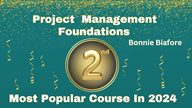 My course Project Management Foundations has been updated with several text-based entries in the Table of Contents. You can read up on the hybrid project management lifecycle, get tips on creating a project information system, review a checklist for effective meetings, and more.
_______________________________________
This article belongs to the Bonnie’s Project Pointers newsletter series, which has more than 92,000 subscribers. This newsletter is 100% written by a human (no aliens or AIs involved). If you like this article, you can subscribe to receive notifications when a new article posts.
Want to learn more about the topics I talk about in these newsletters? Watch my courses in the LinkedIn Learning Library and tune into my LinkedIn Office Hours live broadcasts.
