
Posts

Leadership Skills for PMs: Edition 3 – Active Listening
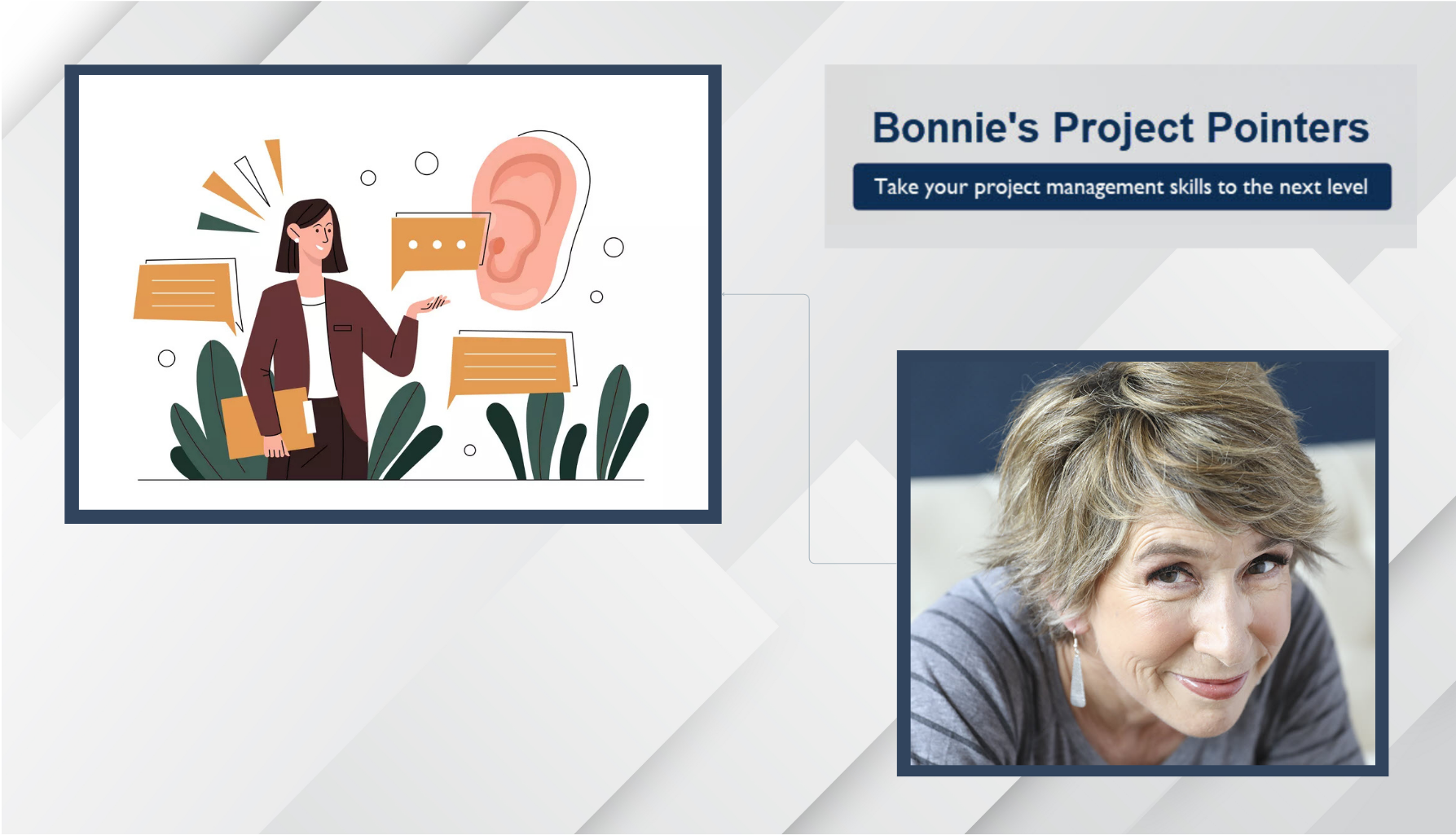
Leadership Skills for PMs Edition 3 – Active ListeningWant to be respected by your team members and other stakeholders? Make them feel heard. The most effective way to do that is to engage in active listening, which goes way beyond hearing what other people say. It’s understanding their meaning, intent, and the implications for the project. Here are active listening habits to embrace. 

  • Stop multitasking during conversations. We’re all guilty of trying to multitask, but in most cases, we are trading perceived productivity for effectiveness. In no area is this more true than when someone else is talking. Multitasking introduces risk that the message may not be fully received or understood, and it can make the speaker feel disrespected. Even worse, it kills trust. Close the laptop, put the phone away, and pay full attention. You’ll catch issues earlier and build stronger relationships. Plus, it offers an opportunity to read between the lines of what’s being said, allowing for deeper understanding. 
  • Dig deeper. An effective way to convey your project ownership is to have detailed knowledge of what’s happening with the project. Active listening doesn’t always mean remaining quiet. It can mean asking questions, probing for more relevant information, and gaining a deeper understanding of stakeholders’ perspectives and status. For example, if a task owner says they are “almost done” with their work, find out what “almost done” means to them. Ask if the task is hours or days from being completed. Also, understand what needs to happen for the task to be declared complete. Questions like these provide a realistic status and allow for action to be taken before issues arise. 
  • Paraphrase what you hear. The project manager doesn’t have to know all the project’s technical details. When a stakeholder explains a complex issue, summarize it: “Let me confirm my understanding. You have a couple of bugs to fix, but when they are resolved, the task will be complete. Is that correct?” This does two things – it shows you were listening, and it catches miscommunication before it creates an issue.
  • Pay attention to what’s unspoken. A lot of information can come from body language, facial expressions, tone, or long pauses. For example, if a typically chatty stakeholder is quiet, follow up with them. Maybe they’re struggling with something, but don’t want to seem incompetent. Be sensitive but strive to understand what’s happening. Ask open-ended questions like “How are you feeling about the process we are following?” or “Do you have a concern you haven’t shared?”
  • Create psychological safety. Your team needs to feel safe telling you about problems. If you react defensively or lash out at the messenger, people will stop sharing. When someone delivers bad news, thank them first. Then go into solution-finding mode. Make it clear that you’d rather know about issues early, when you can still respond. This maximizes learning and supports the stakeholder who is likely stressed by being the bearer of bad news.

For my brave readers, share an anecdote with an active listening win or a multi-tasking horror story.


For more about effective listening, check out Tatiana Kolovou and Brenda Bailey Hughes’ course, Effective Listening.


_______________________________________

This article belongs to the Bonnie’s Project Pointers newsletter series, which has more than 98,000 subscribers. This newsletter is 100% written by a human (no aliens or AIs involved). If you like this article, you can subscribe to receive notifications when a new article posts.

Want to learn more about the topics I talk about in these newsletters? Watch my courses in the LinkedIn Learning Library and tune into my LinkedIn Office Hours live broadcasts.


_______________________________________

Leadership Skills for PMs – Edition 2 – Communication

Leadership Ed 2 CommunicationLeadership skills play a significant role in being an effective project manager.  Based on poll results, this is the second in a series of articles on leadership skills that help project managers succeed. To get and maintain stakeholders’ support and be effective leaders, project managers have to communicate accurately and diligently.

    • Make communication central to the PM role. The greatest expectation placed on project managers is to communicate. Project status information, what team members need to deliver, project outcomes, and the presence of risk are some of the topics that stakeholders must understand. Communication from the project manager is the source of this understanding. Successful project managers are almost obsessive about communicating to ensure all stakeholders know the project’s status and how they can contribute to its success.
    • Provide access to details. Many project artifacts, such as status reports, are designed to be high-level summaries. That doesn’t mean details aren’t communicated. Many people advise against sharing details, as they may trigger time-consuming questions from senior managers who don’t understand the project’s intricacies. Don’t believe it. Making details available and responding to questions appropriately increases confidence in the project and the project manager. So, keep widely distributed artifacts at a high level, but include links to the details that stakeholders can review.
    • Manage communication project-wide. Effective communication management is needed to ensure that perceptions of the project are accurate and up to date. This involves coordinating who communicates with whom and ensuring that the sources of data are consistent and diligently controlled. Beyond that, experienced project managers focus on pairing the best project team members to suit key stakeholders. For example, if a stakeholder is very detail-oriented, they should be paired with a similarly detail-focused project team member. If a stakeholder has a specific business focus, such as sales or finance, the project team member designated to communicate with them should possess similar business capabilities.
    • Document everything! We’ve all made this mistake at some point: not having written documentation from a meeting, the logic for a project decision, or a stakeholder’s viewpoint. People don’t always remember the opinions they share because business circumstances can change rapidly, and their thinking follows suit. With the AI tools readily available in today’s world, capturing, editing, and sharing documentation from meetings, phone calls, and other discussions is easy and efficient.  Utilize these tools and create a filing system for project documentation that enables easy retrieval of documentation when needed. It can save time and frustration as the project progresses.
    • Be an active listener. Communication is a two-way street. Successful project managers focus on accurately receiving information with the same intensity they distribute it. Pay attention. When stakeholders talk, don’t try to multitask. Give full attention whenever people are talking. Make notes when discussions are finished so their opinions and viewpoints are not forgotten. (In a future edition, we will discuss active listening.)


For more about effective communication of all types, check out Communication Foundations with Tatiana Kolovou and Brenda Bailey Hughes.


_______________________________________

This article belongs to the Bonnie’s Project Pointers newsletter series, which has more than 97,000 subscribers. This newsletter is 100% written by a human (no aliens or AIs involved). If you like this article, you can subscribe to receive notifications when a new article posts.

Want to learn more about the topics I talk about in these newsletters? Watch my courses in the LinkedIn Learning Library and tune into my LinkedIn Office Hours live broadcasts.

_______________________________________

Leadership Skills for PMs: Edition 1 – Business Focus

Leadership Ed 1 Focusing on the businessA project manager’s job is more than just implementing project management tools and artifacts. Leadership skills play a significant role in being an effective project manager.  Based on poll results, this is the first in a series of articles on leadership skills that help project managers succeed. Because organizations launch projects to deliver value to the business, project managers need to focus on the business’s goals and strategies to lead effectively.

  • Understand the business environment and the desired business value. Job #1 is supporting the project’s intention and confirming it will deliver the desired value. While that might seem straightforward, many projects don’t deliver the intended value, even when meeting the triple constraints of scope, time, and cost. For example, a project was designed to deliver a new system to increase the efficiency of product delivery. The project team accepted the scope without questioning whether it would satisfy the business need to deliver products to customers more rapidly. The new system was delivered within the triple constraints, but product delivery times were still longer than expected. What was the problem? Contracts with their shipping companies did not align with the delivery times desired by the business. Do your homework to understand the business environment and processes in place. That way, you can validate the project scope, budget, and timeframe.
  • Address the project’s positive and negative business impacts. Not all projects benefit all areas of the business. I worked on a project that implemented new tools and business processes, increasing the efficiency of finance staff members. However, the payroll changes that came with the new systems and processes increased the HR staff workload. Business-savvy project managers collaborate with all stakeholders to understand how to maximize positive impacts and minimize negative ones. 
  • Use business terms accurately. Using the language that stakeholders use helps confirm a common understanding of business processes and what the project will deliver. But you have to use that vocabulary accurately. A project manager who throws around business buzzwords incorrectly quickly loses the confidence of stakeholders and will struggle to engage stakeholders. Make sure the entire project team understands the terms commonly used by stakeholders so they use them accurately and effectively. Note: A future article in this series will address communications. 
  • Navigate differing business expectations. Not all stakeholders’ expectations will be aligned. Addressing this situation requires recognizing potential sources of conflict that exist or could arise between different business areas. Effective communication skills are essential to facilitate discussions between stakeholders with diverse project objectives. However, reaching agreement between conflicting stakeholders requires a business mindset and, once again, doing your homework to understand the processes, strengths, and weaknesses that the project can address.
  • Be politically aware. Politics exists in every organization, large or small. While good project managers don’t necessarily have to be “political animals” (scrutinizing every word for its political ramifications and choosing actions and alliances purely from a political point of view), it’s helpful to be aware of when a political hornet’s nest could be stirred up. Understanding political relationships between stakeholders also helps avoid inadvertently triggering arguments that could harm project objectives. Take time to investigate and understand what’s behind the politics in your environment.


Coming Up

Whether you’re a manager aiming to lead more effectively or a team member feeling stifled by excessive oversight, this conversation is for you. Join Julie Robinson and I for Office Hours on Tuesday, September 23, 2025 3pm MT, 5 PM ET where we will talk about how to improve performance by reducing or eliminating micro-management.  We’ll discuss how to recognize signs of micro-management, whether you’re dishing it out or receiving it. If you’re a manager, you’ll gain insight into the why of this behavior and what you can do to become a more empowering leader. Team members will discover strategies for regaining autonomy. You’ll come away with a handout from Julie with tools and resources to support lasting change. Click here to join!

_______________________________________

This article belongs to the Bonnie’s Project Pointers newsletter series, which has more than 97,000 subscribers. This newsletter is 100% written by a human (no aliens or AIs involved). If you like this article, you can subscribe to receive notifications when a new article posts.

Want to learn more about the topics I talk about in these newsletters? Watch my courses in the LinkedIn Learning Library and tune into my LinkedIn Office Hours live broadcasts.
_______________________________________

KPIs for Measuring Hybrid Project Performance

Hybrid Project KPIsHybrid projects, combining elements of traditional waterfall and agile methods, are becoming the norm. As a result, you need some changes to Key Process Indicators (KPIs) to manage the success of this type of project. Here’s a set of KPIs that help measure performance in a hybrid project environment.

Schedule management

  • For project areas using waterfall, track on-time task completion rates against the baseline schedule. Calculate this by dividing the number of tasks completed on time by the total number of tasks completed.
    • Formula: completed on-time tasks / total tasks completed
  • For agile project areas, calculate on-time feature completion rates. Calculate this by dividing the number of features completed as planned within the sprint plan by the total number of features completed.
    • Formula: features completed as planned within the sprint plan / total features completed
  • To determine the overall schedule management KPI, combine the results from the task and feature completion rates.  Here’s an example:
    • 8 on-time tasks with 10 total waterfall tasks completed
    • 29 on-time features with 30 total features completed 
    • Hybrid Task/Feature KPI
      • (On-time task completions + On-time feature completions)/(Total task and feature completions)
      • KPI result: (8+29)/40= 92.5%
      • Note: Basic hybrid projects should target 90% or more as a task/feature timeliness KPI; complex projects should target 80-85% or more.

Budget Management

  • For waterfall project areas, track costs per task. 
  • For agile areas, track the actual cost to build the tasks delivered to the client. (That’s because quickly delivering usable functions to the business is a standard characteristic of agile projects.) This cost typically consists of agile team staffing costs, plus any equipment required to make functions usable. Compare this cost to the business value generated using the delivered functions, that is the cost savings from using those functions). Use these values to calculate the return on investment (as defined in the PMBOK7 test guide).
  • Here’s an example:
    • Return on investment KPI formula: Value added to the business / Cost of producing delivered functions
      • Cost to produce functions: $20,000
      • Cost savings using those functions: $30,000
      • Ratio = 30000/20000 = 1.5, indicating a 150% return on investment
    • Hybrid budget KPI formula: return on investment for the total business value created / actual cost for tasks or features delivered to the client
  • Note: Calculating the business value created by deliverables can sometimes take several months to realize. In those cases, this KPI is a demonstration of project effectiveness. When business value can be quickly realized (or projected, based on early results), then this KPI can show trends in the project’s effectiveness as it progresses. As an alternative, for business value that takes time to be realized, you can calculate return on investment, which accounts for the time value of money. Here’s a video that explains how to calculate financial ROI: https://www.linkedin.com/learning/supply-chain-and-operations-management-tips/calculate-return-on-investment

Scope Management

  • Calculate a hybrid scope stability KPI. This KPI measures scope changes for controlled and approved changes in waterfall area, and new features added to agile areas. Note: Re-prioritization of agile features is NOT considered a scope change and does not appear in this calculation.
    • Formula: (Current number of waterfall requirements + current number of agile features) / (Initial number of waterfall requirements + initial number of agile features)
    • Note: Initial requirements and features are the number of each at the start of the project. The current number is the original number plus additions since the start of the project: approved requirement additions in waterfall areas and new features added to the backlog. 
    • Projects that add a significant number of requirements or features increase risk. The target for hybrid scope stability is 1.2 or less (no greater than 20% additional requirements/features added to the project).

Quality Management

  • A Hybrid Quality KPI is straightforward. Calculate the errors per deliverable.
  • Formula: (number of defects discovered by the end user community) / total completed tasks and features delivered to stakeholders
  • Example: 
    • 28 tasks completed and delivered to stakeholders
    • 45 features completed and delivered 
    • 17 errors identified by end users
    • Result: 17/(28+45) = .23 errors per deliverable
    • Note: Set a target for errors per deliverable based on history for the organization

If you have the data for these calculations, run them through these calcs to see how your project is doing! Do you have other recommendations for hybrid metrics? Share them with us in the comments!


Coming Up

Whether you’re a manager aiming to lead more effectively or a team member feeling stifled by excessive oversight, this conversation is for you. Join Julie Robinson and I for Office Hours on Tuesday, September 23, 2025 3pm MT, 5 PM ET where we will talk about how to improve performance by reducing or eliminating micro-management.  We’ll discuss how to recognize signs of micro-management, whether you’re dishing it out or receiving it. If you’re a manager, you’ll gain insight into the why of this behavior and what you can do to become a more empowering leader. Team members will discover strategies for regaining autonomy. You’ll come away with a handout from Julie with tools and resources to support lasting change. Click here to join!


_______________________________________

This article belongs to the Bonnie’s Project Pointers newsletter series, which has more than 97,000 subscribers. This newsletter is 100% written by a human (no aliens or AIs involved). If you like this article, you can subscribe to receive notifications when a new article posts.

Want to learn more about the topics I talk about in these newsletters? Watch my courses in the LinkedIn Learning Library and tune into my LinkedIn Office Hours live broadcasts.

_______________________________________

Supporting Sponsor Decision Making

Supporting sponsor decisionsSponsors have to make critical decisions that can affect both the project and the overall business. But not all project sponsors are ready for this responsibility. As a proactive project manager, you can help. Here’s how: 

  • Anticipate when decisions are needed. The more time you give a sponsor to ponder the decisions they need to make, the better. That way, they can tell you the data and help that they need to make a confident decision. And you can develop data collection processes and schedule time to review data to ensure it accurately reflects the project situation. 
  • Sort through facts, intuition, and conjecture. Major decisions often require significant input. To help the sponsor sort through the information they receive: confirm facts, identify when a viewpoint comes from intuition, and when the info shared is someone’s conjecture or assumption. This effort can sometimes help the sponsor confirm assumptions.
  • Identify the sponsor’s preferred data sources. Project sponsors usually have favorite data sources, for example, internal trusted advisors or external entities like consulting companies. It’s good practice to proactively ensure the input from these sources is incorporated into the decision-making process.  
  • Inform the sponsor of the decision pros/cons, including affected stakeholders and business processes. Sponsors might make decisions without fully understanding the impact on all business areas and stakeholders. To address this, it’s best to proactively summarize detailed pros and cons when you present options. That way, your sponsor can use them to make informed decisions.
  • Anticipate decision timing impacts. Tell the sponsor about potential timing factors to consider. For example, delaying a product purchase decision until shortly before accounting year-end might mean a lower price. Conversely, purchasing a product earlier, though more expensive, might allow project staff to spend more time learning how to best deploy the product.
  • Maintain psychological safety.  Project managers should consider what constitutes psychological safety for themselves and then provide the same to their sponsor. That way, the sponsor will probably feel less stress about their decisions. For example, if you disagree with the sponsor, share that information calmly without being judgmental. Share the risks, saying that this information comes from your experience. Unless it is an extreme situation, reassure the sponsor that you will support their decision regardless of the one they make, given they understand the risks.

Do you have an example of how you’ve supported a sponsor’s decision-making? Share with us in the comments.

For more about working with sponsors, check out this Office Hours with Antonio Nieto-Rodriguez.


Coming Up

Whether you’re a manager aiming to lead more effectively or a team member feeling stifled by excessive oversight, this conversation is for you. Join Julie Robinson and I for Office Hours on Tuesday, September 23, 2025 3pm MT, 5 PM ET where we will talk about how to improve performance by reducing or eliminating micro-management.  We’ll discuss how to recognize signs of micro-management, whether you’re dishing it out or receiving it. If you’re a manager, you’ll gain insight into the why of this behavior and what you can do to become a more empowering leader. Team members will discover strategies for regaining autonomy. You’ll come away with a handout from Julie with tools and resources to support lasting change. Click here to join!

_______________________________________

This article belongs to the Bonnie’s Project Pointers newsletter series, which has more than 97,000 subscribers. This newsletter is 100% written by a human (no aliens or AIs involved). If you like this article, you can subscribe to receive notifications when a new article posts.

Want to learn more about the topics I talk about in these newsletters? Watch my courses in the LinkedIn Learning Library and tune into my LinkedIn Office Hours live broadcasts.

_______________________________________

Helpful Info to Get from a Project Data Repository

helpful info from a repositoryA project repository is only as good as the guidance you can pull from it. Beyond the always useful lessons learned, here are examples of helpful information you can extract from a well-designed project data repository.

  • Issue frequency and trends. A list of the most common project issues along with trends of when they occur during the project is helpful for building a proactive and sound project risk plan. Also, the trending data shows where your project methodology might need shoring up.
  • Staffing trends. The history of availability of operational staff for project work and the timeframes for onboarding contracted staff is useful for creating a staffing plan.  Seasonality trends is also helpful. For example, finance staff might not be available the first week of each accounting month, or staff shortages might occur during holiday periods.
  • Vendor performance. When choosing a vendor to augment resources, information on their performance in your environment supports informed strategic staffing decisions. Key metrics include the time from request until resources arrive on site, the consistency of staff staying on site without being replaced with different resources, successful delivery against objectives, and cost.
  • External entity response times. The turnaround from request to response from external entities helps establish reasonable schedules. Examples include licensing or certification confirmation from government entities and the fabrication of custom parts from vendors.
  • Cumulative impacts of change requests. Other helpful data is baseline project duration and cost along with the average effects of change requests on those values. You can judge the business’s volatility and the quality and completeness of the provided requirements, which helps forecast total project cost and timeframe. For example, if change requests historically add 10% to the cost and three months to the duration, you might consider applying those trends to future project budgets.

What other insightful data items have you extracted from project data repositories? Share with us in the comments.


Coming Up

Whether you’re a manager aiming to lead more effectively or a team member feeling stifled by excessive oversight, this conversation is for you. Join Julie Robinson and I for Office Hours on Tuesday, September 23, 2025 3pm MT, 5 PM ET where we will talk about how to improve performance by reducing or eliminating micro-management.  We’ll discuss how to recognize signs of micro-management, whether you’re dishing it out or receiving it. If you’re a manager, you’ll gain insight into the why of this behavior and what you can do to become a more empowering leader. Team members will discover strategies for regaining autonomy. You’ll come away with a handout from Julie with tools and resources to support lasting change. Click here to join!


_______________________________________

This article belongs to the Bonnie’s Project Pointers newsletter series, which has more than 96,000 subscribers. This newsletter is 100% written by a human (no aliens or AIs involved). If you like this article, you can subscribe to receive notifications when a new article posts.

Want to learn more about the topics I talk about in these newsletters? Watch my courses in the LinkedIn Learning Library and tune into my LinkedIn Office Hours live broadcasts.

_______________________________________

Designing an Effective Project Repository

designing a project data repositoryFiling project documentation in a shared folder named “Repository” doesn’t cut it. An effective project repository is designed to maximize value. It can increase foresight and provide valuable information in project deliverables such as the risk plan. Here are the characteristics of a well-designed project repository.

  • Provides information to solve recurring issues. Designers base how they organize and present information in their project repository on specific challenges the organization faces during project delivery and they ensure that the repository holds project data that helps to improve outcomes in future projects. For example:
    • If estimation is difficult, create common names for frequently used tasks so you can track time and risks for those tasks over many projects and improve performance over time.
    • If risk planning is incomplete, compile risks from reported issues and create an initial risk list with response strategies.
    • If contractors are often used, collect detailed performance and cost information by company and by individual consultant.
  • Includes a powerful search function, indexed with commonly used terms. This makes it easier to find data without reviewing extensive lists. Common terms include terms regularly used in the organization’s project management methodology as well as typical industry terms. For example, “project charter” will be used universally for the document to launch a project. “Pour the foundation” might be a common activity description in construction, while “unit testing” might be used for information technology projects.
  • Organized with clearly defined and consistently applied folder hierarchies (i.e., by project phase, document type, activity, or discipline). While a search function allows for specific data reviews, folder hierarchies enable project managers to review multiple project examples. For example, say a project has a task to prep a roadbed before paving. Various approaches for laying the roadbed, the time taken, and the risks that surfaced could be viewed by looking at histories from several projects. Phases allow project managers to review best practices and standards for closing a project, for example. Cataloguing data by discipline allows for the review of multiple procurement plans to determine the best fit for an upcoming project.
  • Managed by an administrator to maintain status, naming standards, and version control with a focus on continuous improvement. A repository must be clean and easy-to-use or project managers won’t use it. When a repository is used regularly, new ideas for data to extract are generated routinely. Administrators can deploy these ideas to add indexing, massage existing data, or collect additional data to satisfy data requests and improve project delivery.

How do you set up your project repository? Share your tips and tricks with us in the comments.


Coming Up

Whether you’re a manager aiming to lead more effectively or a team member feeling stifled by excessive oversight, this conversation is for you. Join Julie Robinson and I for Office Hours on Tuesday, September 23, 2025 3pm MT, 5 PM ET where we will talk about how to improve performance by reducing or eliminating micro-management.  We’ll discuss how to recognize signs of micro-management, whether you’re dishing it out or receiving it. If you’re a manager, you’ll gain insight into the why of this behavior and what you can do to become a more empowering leader. Team members will discover strategies for regaining autonomy. You’ll come away with a handout from Julie with tools and resources to support lasting change. Click here to join!


_______________________________________

This article belongs to the Bonnie’s Project Pointers newsletter series, which has more than 96,000 subscribers. This newsletter is 100% written by a human (no aliens or AIs involved). If you like this article, you can subscribe to receive notifications when a new article posts.

Want to learn more about the topics I talk about in these newsletters? Watch my courses in the LinkedIn Learning Library and tune into my LinkedIn Office Hours live broadcasts.
_______________________________________

Creating an Environment of Accountability

Creating an Environment of AccountabilityImagine how much more you and your team could accomplish if everyone was accountable for the work they do. You can make this dream come true by creating an environment in which team members hold themselves accountable.  Here’s how:

  • Make sure the project scope is worded to clearly convey why the mission matters and ensure team members understand their role in it. Make sure the project scope is clear and that business objectives are understood by all. Team members should understand precisely how their work aligns with the scope. If there is any doubt, review the project documentation with the team member to resolve any misunderstandings about the project scope and their role within it.
  • Provide clear task definitions. Each team member should know exactly what’s required of them and how their work products will be evaluated.  If there is doubt or confusion, consider compiling a WBS Dictionary to clarify any ambiguous tasks. Get team members involved in creating that dictionary, and you will achieve both clarity and ownership.
  • Schedule reasonable delivery timeframes. No matter how meaningful the mission and how clear the task definitions, team members might not be self-accountable if you don’t allocate enough time for their work. 
  • Acknowledge success. Always acknowledge when team members produce a quality product. Don’t wait until they reach a significant milestone or overcome a complex problem. Recognition breeds self-accountability, because team members want to be part of that atmosphere of success.
  • Model the desired behavior. Demonstrate your own accountability to build accountability in your team. The accountability that you demonstrate as a project manager will influence the level of accountability your team demonstrates. If you meet deadlines, fulfill promises, and handle bad news constructively, accountability will prevail throughout your team. By providing psychological safety within your project, your team members can do their best work.

Do you have other ways to create an atmosphere of accountability? Share your thoughts in the comments.


_______________________________________

This article belongs to the Bonnie’s Project Pointers newsletter series, which has more than 96,000 subscribers. This newsletter is 100% written by a human (no aliens or AIs involved). If you like this article, you can subscribe to receive notifications when a new article posts.

Want to learn more about the topics I talk about in these newsletters? Watch my courses in the LinkedIn Learning Library and tune into my LinkedIn Office Hours live broadcasts.
_______________________________________

Project Assumptions: Useful and Those Not So Much

Assessing a new team member graphicAt a project start, there are things you won’t know, so you have to make assumptions. While management considers whether the project business case is worthwhile, practical and reasonable assumptions can make the difference between a project launch and “a good idea, but.” Here are some ways to differentiate useful assumptions from the ones to avoid.

Useful

  • A high probability of being valid. Accurate and easily verified project assumptions are very useful. Example: You assume that a specific contracted skill is available. A call to a trusted vendor can provide informal verification to confirm the accuracy of the assumption. That’s followed up with a formal request. The contract with the vendor later commits to the skill availability. 
  • Enable initial costs to be estimated. Estimates are part of every initial go/no-go decision. Carefully craft assumptions that can support informed financial decisions.  Example: The assumption about a contracted skill should define the role so a vendor query would provide an approximate hourly or daily rate. This approximation would validate the assumption and support estimated costs.
  • Limited in scope. Useful assumptions address a narrow aspect of a project, rather than a broad prediction of project outcome. Example: An assumption about cost for tooling to maintain a new manufacturing line is appropriate. An assumption of the entire cost of a project to build a new manufacturing line isn’t helpful. There are too many elements contributing to the total project cost, making it impossible to predict anything with confidence. 
  • Supported by project histories. Useful assumptions are based on facts. If the time to produce a project deliverable has been consistent in the past, it is low risk to assume that timeframe for a new project. Example: Even when building an entirely new manufacturing line, preparing the floor and power drops for that line might be like past buildouts. So, you can assume the buildout timeframe in the preliminary plans for a new line. If an assumption isn’t supported by history, it’s time to document the risk and use wider ranges for estimates.
  • Stakeholders understand and support the assumption. Stakeholders have to understand and support assumptions when participating in project go/no-go decisions. Additionally, with assumptions related to stakeholder performance, it enables them to help make the assumption a reality. Example: You might assume a key stakeholder’s availability to support project completion within a constrained timeframe. If stakeholders are aware and understand that assumption, they can strive to ensure that the skilled resource is available

Not useful

  • Speculation that can’t be proven without completing the project. Assumptions regarding items such as customer acceptance of a new product, made without surveys or other market research, are pure speculation and carry high risk. You can determine market acceptance only by completing the project and releasing its product. Example: You assume that new electric toenail clippers will be in high-demand without any customer outreach, and launch the project anyway. Note: Innovative product development often proceeds without surveys, because sharing a novel idea with the marketplace early would hurt competitive advantage. These projects are always high-risk, but when the project’s product is broadly accepted (like the iPhone), the rewards can be significant.
  • Opinions are the basis of an assumption. Opinions are often based on gut feelings, not on fact, but they can be expressed with passion. Question proposed assumptions and evaluate whether the accompanying passion hides a lack of factual basis.
  • Based on old or incorrect data. Assumptions based on incomplete or outdated facts aren’t useful. Confirm the facts behind a proposed project assumption! Example: Stakeholders propose that new robotics will increase manufacturing line output by 300%, based on their experience, and want that applied to a new project they proposed. However, that productivity increase is achieved only when one raw material is used, and the new manufacturing line in the current project will require three raw materials. 
  • Require “ideal conditions” to be accurate. Overly optimistic assumptions can mislead stakeholders. Example: There’s an assumption that construction completion can be achieved within 4 months. However, this can be valid only if there are no weather delays, all materials are delivered on time without defects, and none of the construction crew members fall ill.

Review some assumptions from a current or recent project. Find any that meet the not useful criteria. Think about how you might turn them into useful ones.


_______________________________________

This article belongs to the Bonnie’s Project Pointers newsletter series, which has more than 95,000 subscribers. This newsletter is 100% written by a human (no aliens or AIs involved). If you like this article, you can subscribe to receive notifications when a new article posts.

Want to learn more about the topics I talk about in these newsletters? Watch my courses in the LinkedIn Learning Library and tune into my LinkedIn Office Hours live broadcasts.

_______________________________________

Multi-tasking in Meetings

Newsletter Graphic Advice The PM is INDear Bonnie,

Some people constantly multitask in meetings, which disrupts other people’s attention and prevents important information from getting to the audience. Do you have any recommendations to get people to pay attention? 

Thanks,

Can We Focus on our Meetings?!


Dear Can We Focus,

A well-run meeting, focused on a relevant agenda, is the best approach to curb people’s multitasking.

  1. Know what you’re trying to accomplish. Identify why you need a meeting and the desired results (approval, issue resolution, status).
  2. Create an agenda with a list of topics and time estimate to discuss each one. That way you can be sure to cover every item. You can keep discussions on topic. Plus, if the discussion starts to go off track, you can stop the discussion and create an action item to handle the new item offline (or in another meeting).
  3. Limit meeting attendees to who you need to accomplish the meeting goal. The more people in a meeting, the harder it is to get things done on time. 
  4. Schedule the meeting for when it works for attendees and send the meeting invitation and materials ahead of time. That way, attendees have a chance to prepare. (They might not read beforehand, so be prepared for a quick review.) 
  5. Start meetings on time, even if some attendees are missing. Don’t backtrack when people show up late. That just reinforces their rude behavior. (They can read the meeting notes to catch up on what they missed.) If a key decision-maker is missing, reschedule the meeting rather than sit and wait.
  6. If possible, have someone facilitate the meeting to keep everyone focused.  The facilitator explains the purpose of the meeting, topics, attendees, and ground rules for interaction. The facilitator can coax quiet people to participate or wrangle the discussion back on topic.
  7. Take good meeting notes (or use an AI tool to create them). Be sure to document decisions, action items, and who’s responsible for them. Distribute the notes to attendees and (up) anyone else who needs to know.

Establishing a standard of behavior in meetings promotes better outcomes. You get what you tolerate. Unless different standards are set, meetings won’t get any better.

Here are a couple of strategies for meeting behavior. Have everyone put their phones in a basket, so they won’t be distracted. To make sure everyone is paying attention, assign a task to each person during the meeting. If they can’t recite that to-do at the end of the meeting, assess a fine like buying coffee next time or make them wear a silly hat.

Effective meetings will help keep people from multitasking. You’ll get more done, and you might win some fans. Give yourself a head start. Create a checklist of things to do before you hold a meeting.

For more about effective meetings, check out Dave Crenshaw’s Leading Productive Meetings course.


_______________________________________

This article belongs to the Bonnie’s Project Pointers newsletter series, which has more than 95,000 subscribers. This newsletter is 100% written by a human (no aliens or AIs involved). If you like this article, you can subscribe to receive notifications when a new article posts.

Want to learn more about the topics I talk about in these newsletters? Watch my courses in the LinkedIn Learning Library and tune into my LinkedIn Office Hours live broadcasts.

_______________________________________