
Leadership Skills for PMs: Edition 3 – Active Listening
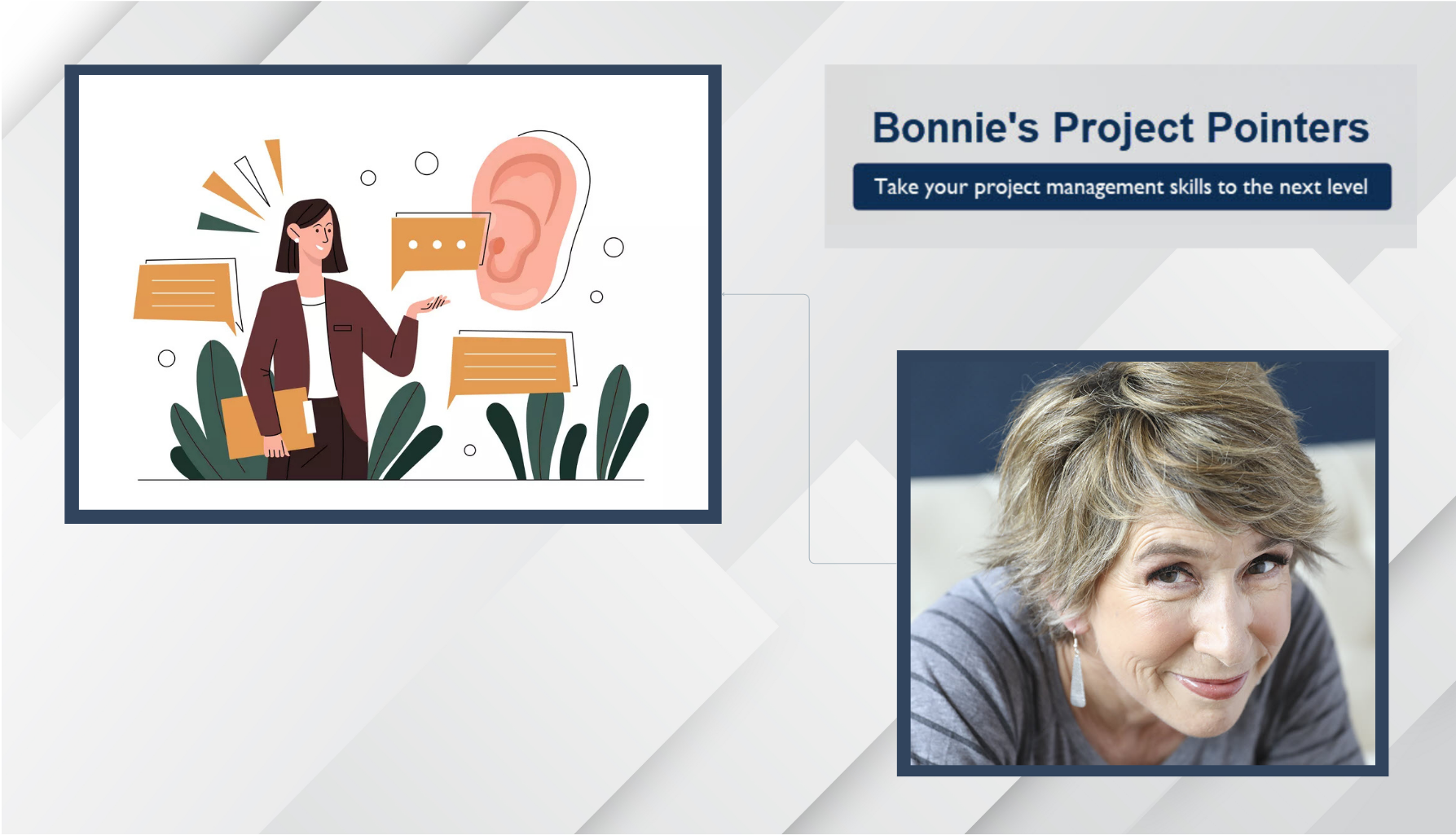 Want to be respected by your team members and other stakeholders? Make them feel heard. The most effective way to do that is to engage in active listening, which goes way beyond hearing what other people say. It’s understanding their meaning, intent, and the implications for the project. Here are active listening habits to embrace.
- Stop multitasking during conversations. We’re all guilty of trying to multitask, but in most cases, we are trading perceived productivity for effectiveness. In no area is this more true than when someone else is talking. Multitasking introduces risk that the message may not be fully received or understood, and it can make the speaker feel disrespected. Even worse, it kills trust. Close the laptop, put the phone away, and pay full attention. You’ll catch issues earlier and build stronger relationships. Plus, it offers an opportunity to read between the lines of what’s being said, allowing for deeper understanding.
- Dig deeper. An effective way to convey your project ownership is to have detailed knowledge of what’s happening with the project. Active listening doesn’t always mean remaining quiet. It can mean asking questions, probing for more relevant information, and gaining a deeper understanding of stakeholders’ perspectives and status. For example, if a task owner says they are “almost done” with their work, find out what “almost done” means to them. Ask if the task is hours or days from being completed. Also, understand what needs to happen for the task to be declared complete. Questions like these provide a realistic status and allow for action to be taken before issues arise.
- Paraphrase what you hear. The project manager doesn’t have to know all the project’s technical details. When a stakeholder explains a complex issue, summarize it: “Let me confirm my understanding. You have a couple of bugs to fix, but when they are resolved, the task will be complete. Is that correct?” This does two things – it shows you were listening, and it catches miscommunication before it creates an issue.
- Pay attention to what’s unspoken. A lot of information can come from body language, facial expressions, tone, or long pauses. For example, if a typically chatty stakeholder is quiet, follow up with them. Maybe they’re struggling with something, but don’t want to seem incompetent. Be sensitive but strive to understand what’s happening. Ask open-ended questions like “How are you feeling about the process we are following?” or “Do you have a concern you haven’t shared?”
- Create psychological safety. Your team needs to feel safe telling you about problems. If you react defensively or lash out at the messenger, people will stop sharing. When someone delivers bad news, thank them first. Then go into solution-finding mode. Make it clear that you’d rather know about issues early, when you can still respond. This maximizes learning and supports the stakeholder who is likely stressed by being the bearer of bad news.
For my brave readers, share an anecdote with an active listening win or a multi-tasking horror story.
For more about effective listening, check out Tatiana Kolovou and Brenda Bailey Hughes’ course, Effective Listening.
_______________________________________
This article belongs to the Bonnie’s Project Pointers newsletter series, which has more than 98,000 subscribers. This newsletter is 100% written by a human (no aliens or AIs involved). If you like this article, you can subscribe to receive notifications when a new article posts.
Want to learn more about the topics I talk about in these newsletters? Watch my courses in the LinkedIn Learning Library and tune into my LinkedIn Office Hours live broadcasts.